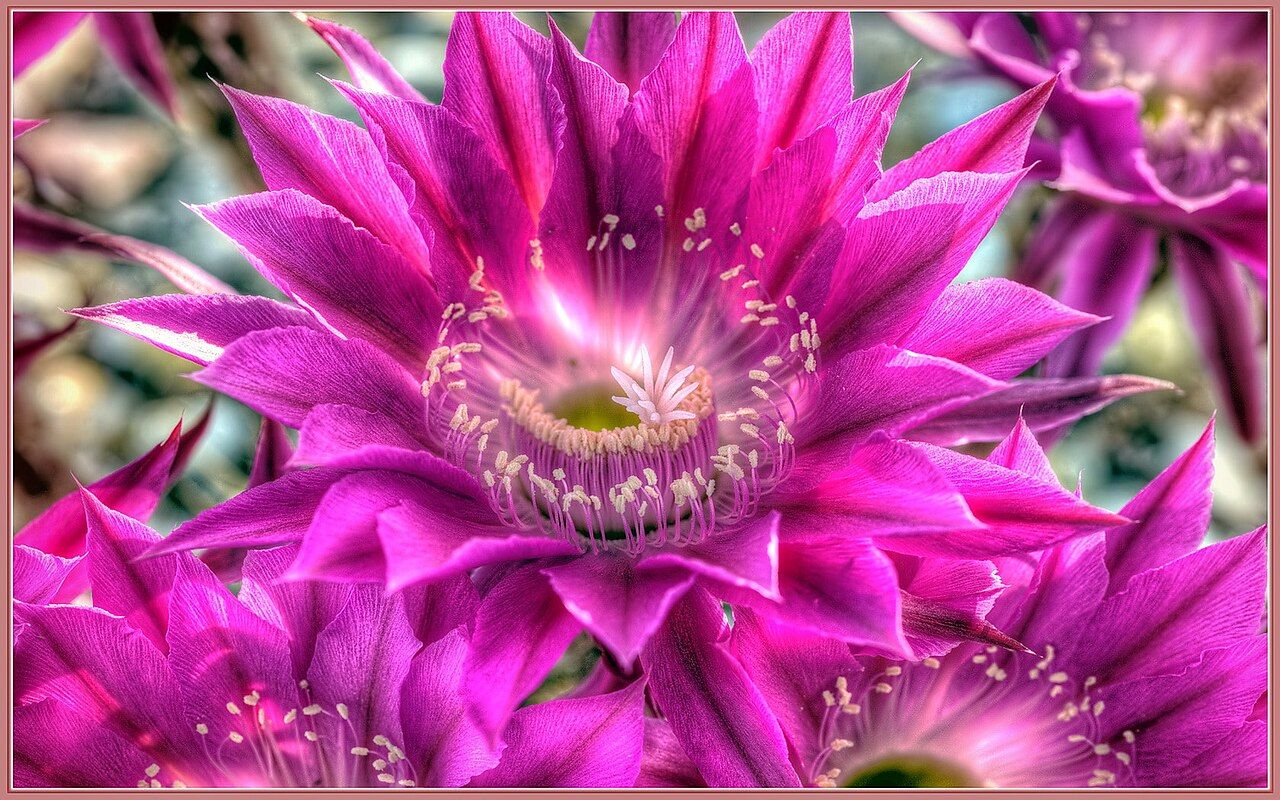
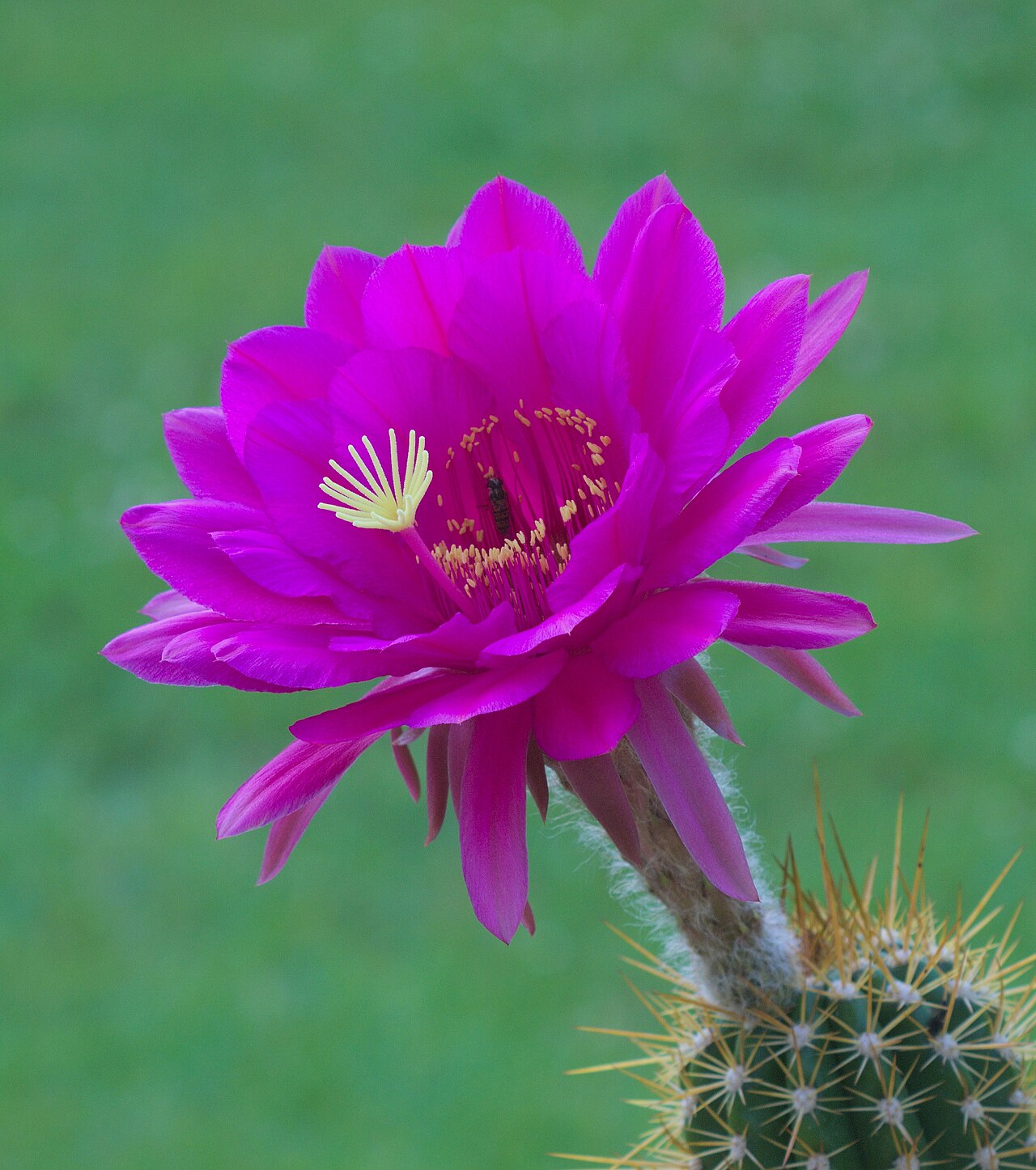
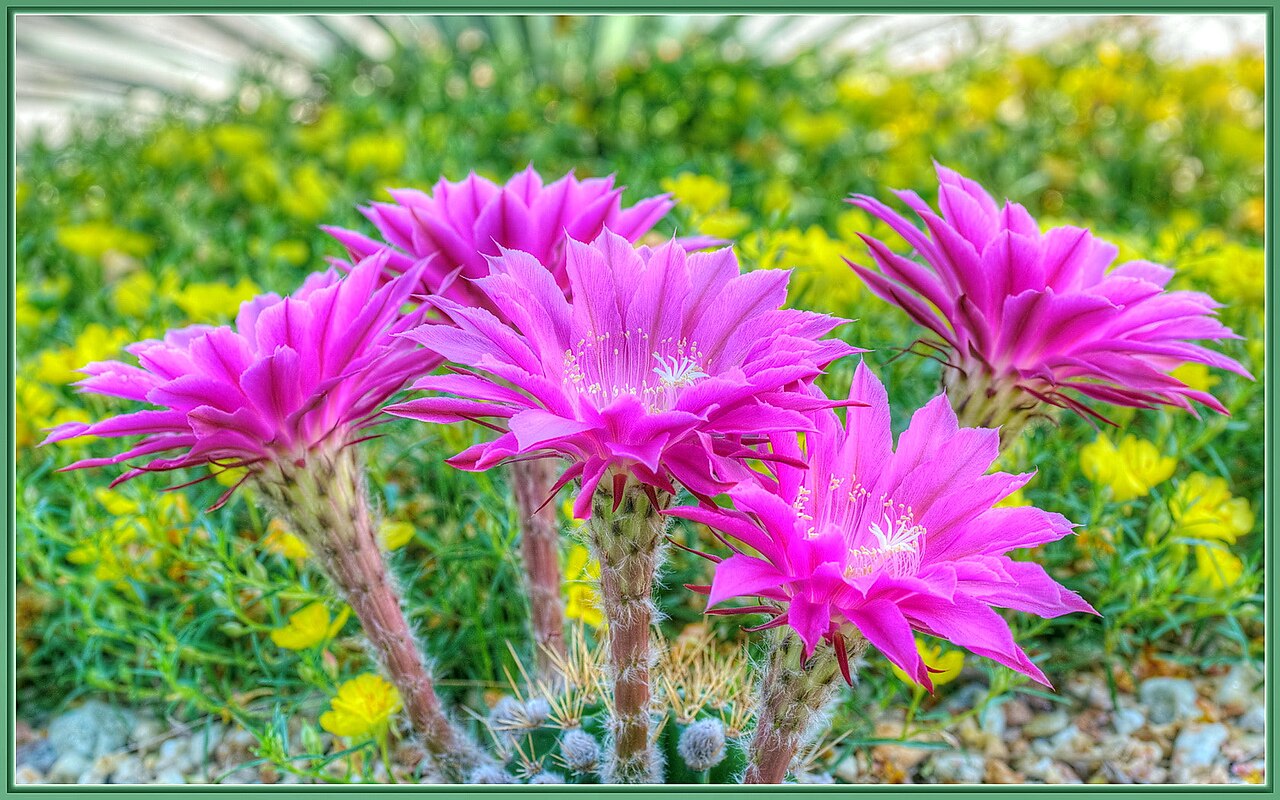
Trichocereus hybrid cacti are also known as Echinopsis hybrids. [Trichocereus Hybrids by Linda Hollingsworth, Bexar County Master Gardener]
Trichocereus hybrids are columnar in growth and can grow to about 4 feet high at maturity. [Trichocereus Hybrids by Linda Hollingsworth, Bexar County Master Gardener]
Growing & propagation
Trichocereus hybrids generally bloom in early May depending on weather and temperature, can bloom in many sets, and flower color varies with weather and fertilization. [Trichocereus Hybrids by Linda Hollingsworth, Bexar County Master Gardener]
Most buds open from late night into early morning and the blooms last only one day; the flowers attract bees, butterflies, and hummingbirds. [Trichocereus Hybrids; Trichocereus Hybrids by Linda Hollingsworth, Bexar County Master Gardener]
Recommended fertilization: 0-10-10 from mid-January until buds end; 10-10-5 once per month June through October; no fertilizer (rest period) November through mid-January. [Trichocereus Hybrids; Trichocereus Hybrids by Linda Hollingsworth, Bexar County Master Gardener]
Trichocereus hybrids are tolerant of hard frosts (about 25 F) and heat. [Trichocereus Hybrids by Linda Hollingsworth, Bexar County Master Gardener]
They can be planted in containers or in the ground and prefer filtered shade to full sun with afternoon shade, doing well under Palo Verde or mesquite trees. [Trichocereus Hybrids; Trichocereus Hybrids by Linda Hollingsworth, Bexar County Master Gardener]
They are propagated by stem cuttings (allowed to callus over) or by pups (offsets). [Trichocereus Hybrids; Trichocereus Hybrids by Linda Hollingsworth, Bexar County Master Gardener]
Cutting off spent blooms close to the stem results in greater flowering instead of producing fruit from pollinated flowers. [Trichocereus Hybrids; Trichocereus Hybrids by Linda Hollingsworth, Bexar County Master Gardener]
Clone genealogy
Trichocereus hybrids are mostly a cross of two different parents because most are self-sterile. [Trichocereus Hybrids by Linda Hollingsworth, Bexar County Master Gardener]
Hybrid offspring tend to come closer to the mother plant, although there are exceptions. [Trichocereus Hybrids by Linda Hollingsworth, Bexar County Master Gardener]