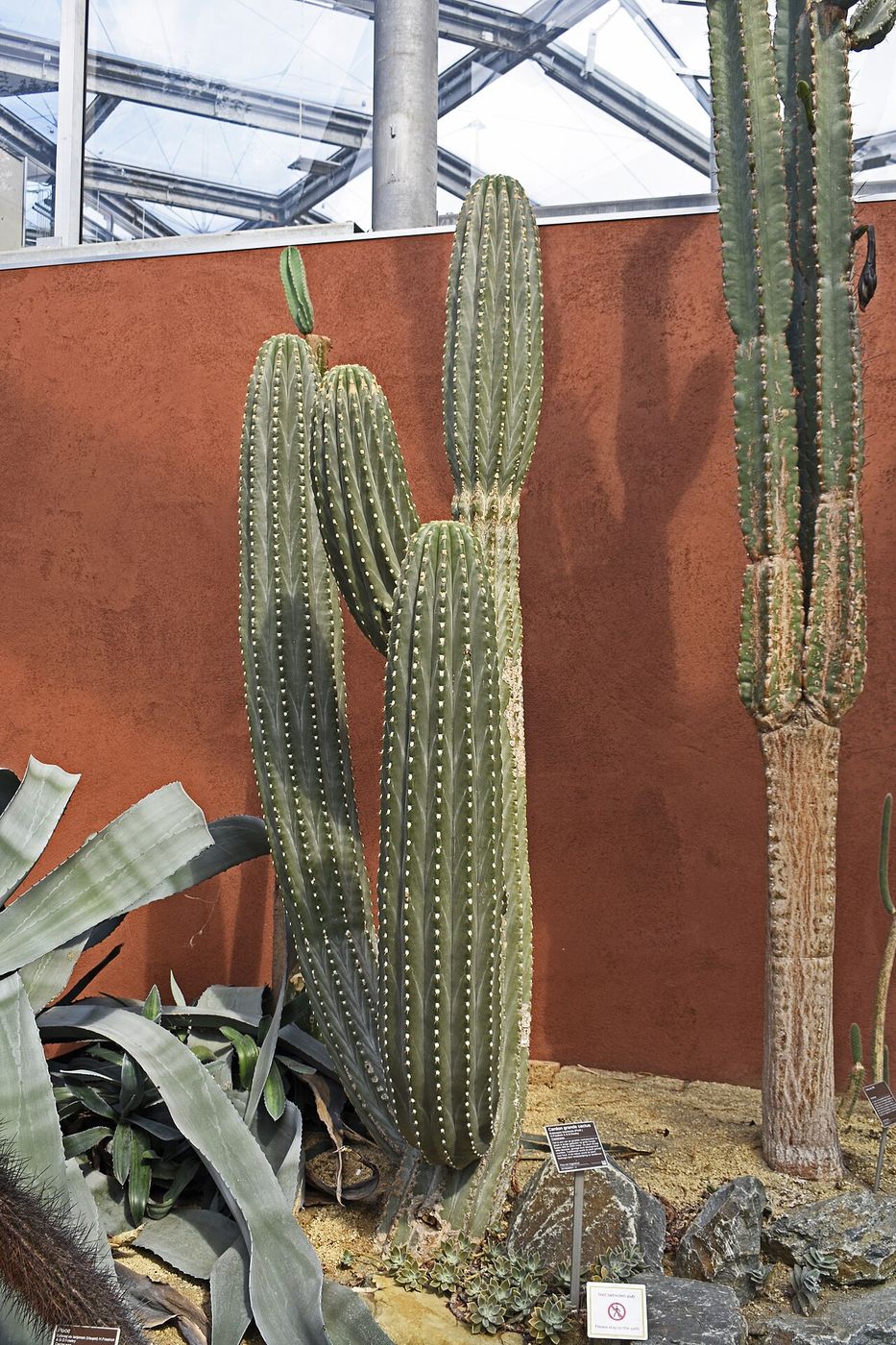
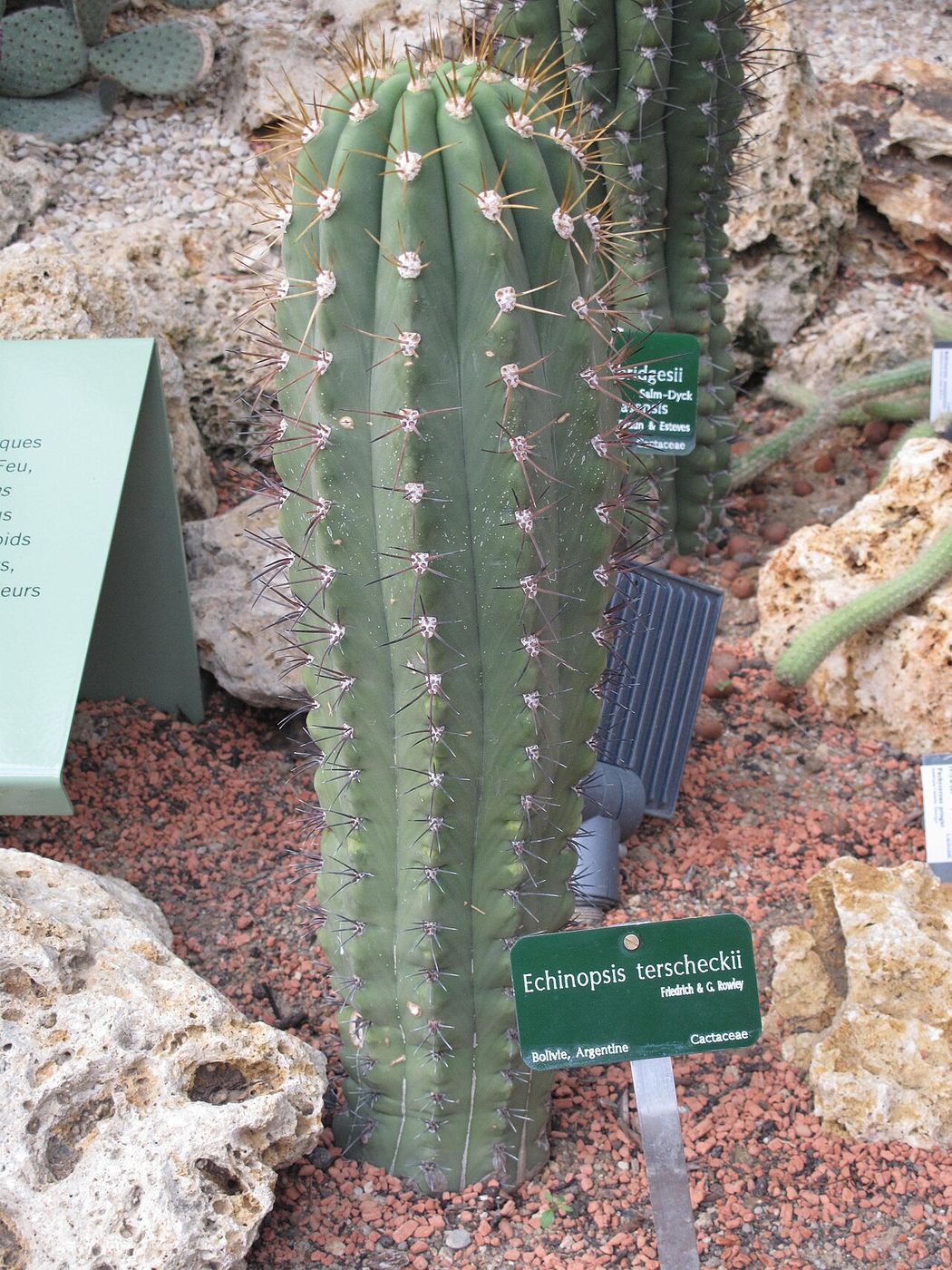
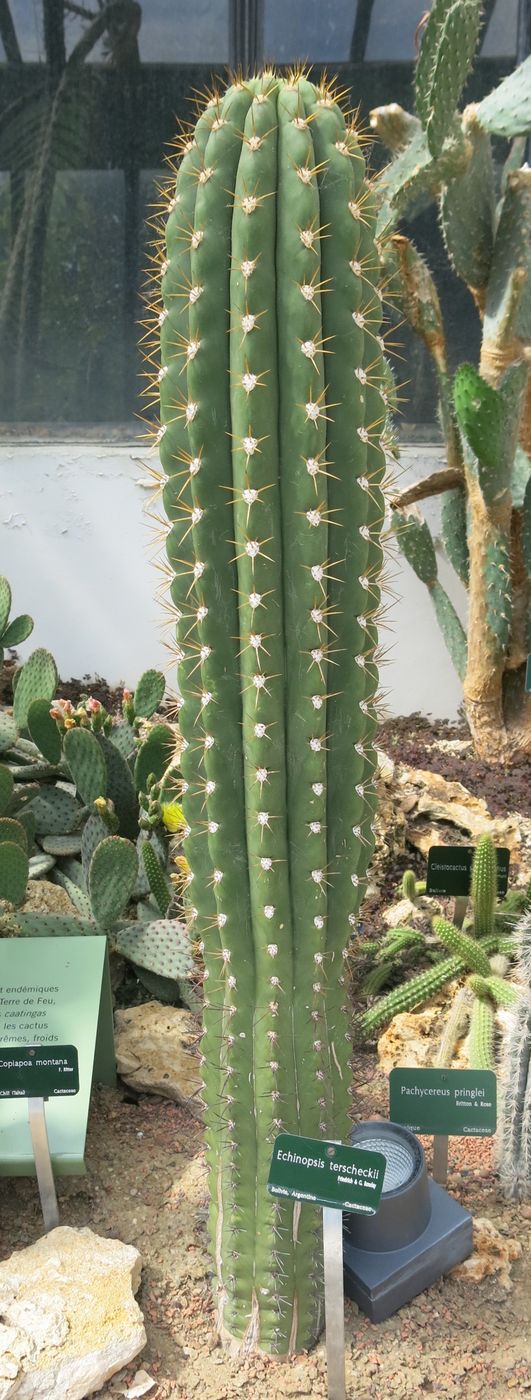
First described as Cereus terscheckii by Ludwig Pfeiffer in 1837; the epithet honors Carl Adolph Terscheck, a court gardener at the Japanisches Palais in Dresden.
First described as Cereus terscheckii by Ludwig Pfeiffer in 1837; the epithet honors Carl Adolph Terscheck, a court gardener at the Japanisches Palais in Dresden. [https://en.wikipedia.org/wiki/Echinopsis_terscheckii (citing Pfeiffer 1837)]
The taxon has been placed across multiple genera over time: Cereus, Pilocereus, Trichocereus, Echinopsis, and Leucostele. Friedrich & Rowley moved it to Echinopsis in 1974. [https://en.wikipedia.org/wiki/Echinopsis_terscheckii; https://www.llifle.com/Encyclopedia/CACTI/Family/Cactaceae/8744/Echinopsis_terscheckii]
Native range
Native to northwestern Argentina (Catamarca, Salta, Jujuy, La Rioja, San Juan, and Tucuman provinces) and Bolivia (Tarija department). It is the eponymous cactus of Los Cardones National Park in Salta Province. [https://www.llifle.com/Encyclopedia/CACTI/Family/Cactaceae/8744/Echinopsis_terscheckii; https://en.wikipedia.org/wiki/Echinopsis_terscheckii]
Habitat
Occupies grasslands, shrublands, and semiarid intermediate Chaco forest receiving roughly 400-750 mm annual rainfall, on steep hillsides; distributed as a north-south corridor across Puna, Prepuna, Chaco, and Monte phytogeographic regions of NW Argentina. [https://www.llifle.com/Encyclopedia/CACTI/Family/Cactaceae/8744/Echinopsis_terscheckii]
Growing & propagation
T. terscheckii appears hardy even when wet and has proven quite cold hardy (even wet into the upper teens F); it bears strong, deep-puncturing spines requiring careful handling. [Trout's Notes on the Cultivation & Propagation of Cacti]